Introduction
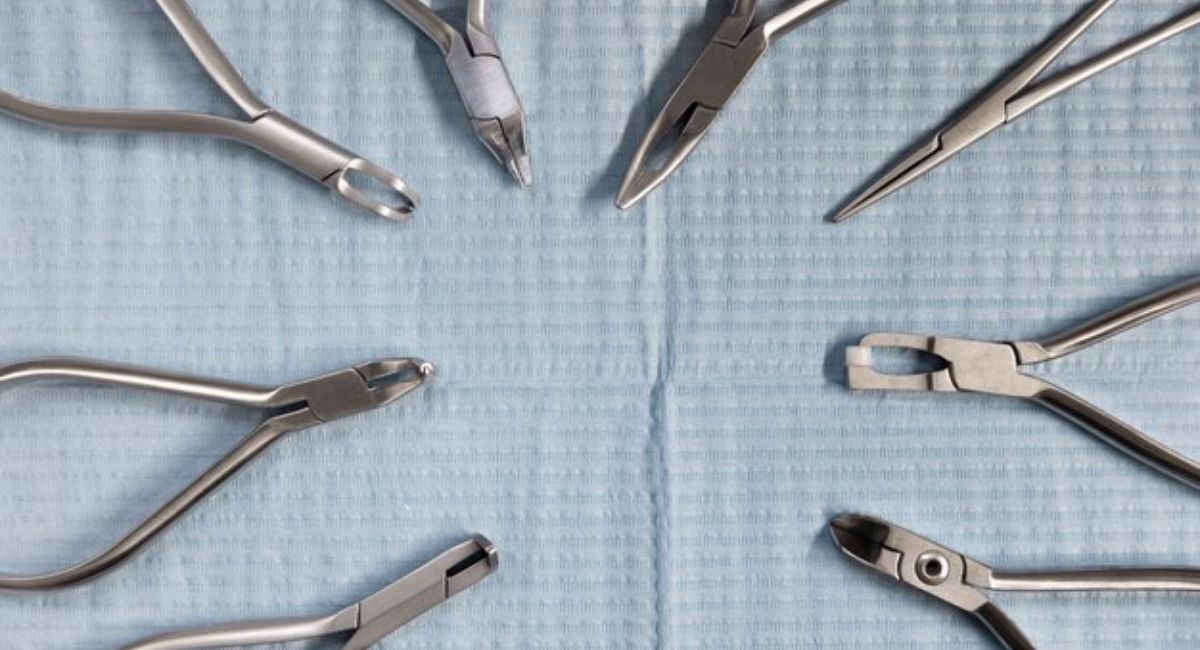
Vulsellum forceps are essential instruments in gynecological procedures. They are designed to firmly grasp and stabilize cervical or uterine tissue. Their toothed jaws provide a secure hold during delicate interventions.
From routine examinations to minor surgical procedures, these forceps play a critical role in ensuring precision and control. Different designs—such as straight, curved, and multi-tooth variations—serve specific clinical needs.
Understanding their types, features, and applications helps healthcare professionals choose the right instrument for each procedure. In the sections ahead, we will explore their structure, variations, and practical uses in detail
Teale Vulsellum Forceps
Vulsellum forceps are specialized surgical instruments used primarily in gynecology to grasp and stabilize the cervix or uterine tissue. These instruments feature toothed jaws that interlock, allowing for a secure hold without slipping during delicate procedures. Their design ensures precision, control, and safety in a variety of clinical situations.
Teale vulsellum forceps are available in both straight and side-curved versions, typically measuring around 23 cm. The straight model is ideal for standard procedures, while the curved design allows improved access to the cervix in angled or restricted surgical fields. Their reliable ring handles and ratchet locking mechanism make them easy to control while maintaining firm tissue grip.
Jacobs Vulsellum Forceps
Jacobs vulsellum forceps are slightly shorter, usually around 21.6 cm, and are designed for precision manipulation of the cervix. Available in straight and curved forms, they provide controlled traction during minor uterine procedures.
The instrument’s interlocking teeth allow secure tissue grasping while minimizing trauma. Surgeons often prefer Jacobs forceps for procedures requiring both stability and fine control, such as cervical biopsies or intrauterine device insertions.
Schroeder Vulsellum Forceps
Schroeder forceps typically measure 25 cm and feature 2×2 toothed jaws. Available in straight and curved designs, they are commonly used in uterine procedures where a firm hold on tissue is necessary.
Their slightly longer length provides greater reach within the vaginal canal, while the ergonomic ring handles and ratchet system ensure the tissue remains stable during the procedure. Schroeder uterine vulsellum forceps are also available in 10-inch models for specific surgical needs.
Teale Vulsellum Forceps (Detailed)
The Teale model is particularly valued for its versatility. The straight version offers straightforward access for general procedures, while the side-curved variation facilitates improved maneuvering around anatomical structures.
The toothed jaws interlock tightly, providing reliable traction. Constructed from high-grade stainless steel, these forceps are corrosion-resistant, durable, and suitable for repeated sterilization without compromising performance.
Gordon Uterine Vulsellum Forceps 8 3/4”, Straight Jaws, 3×3 Teeth, Ring Handle
Gordon uterine forceps are designed for strong cervical traction. Their 3×3 teeth configuration ensures a firm grip, while the straight jaws provide consistent access to the uterine tissue. Measuring approximately 8¾ inches (24 cm), these forceps are suitable for various gynecological procedures requiring maximum stability.
The ring handle and ratchet locking mechanism allow controlled application of pressure, preventing slippage while reducing hand fatigue during long procedures.
FORCEPS / VULSELLUM
Vulsellum forceps come in numerous models and variations, each tailored to specific surgical requirements:
SCHROEDER VULSELLUM FORCEPS, STRAIGHT, 25CM
Used for firm cervical traction, offering controlled grip with 2×2 teeth.
SCHROEDER VULSELLUM FORCEPS, CURVED, 25CM
Provides access in angled surgical fields while maintaining secure tissue hold.
GORDON VULSELLUM FORCEPS, STRAIGHT, 24CM
Features 3×3 teeth for strong cervical stabilization.
MEDICON VULSELLUM FORCEPS, STRAIGHT, 24CM
Designed for general uterine procedures with durable construction.
CZERNY VULSELLUM FORCEPS, 20.5CM
A compact model for minor procedures requiring moderate traction.
LITTLEWOOD VULSELLUM FORCEPS, 18.5CM
Ideal for delicate tissue handling due to smaller size and precision design.
MUSEUX VULSELLUM FORCEPS, STRAIGHT & CURVED, 24CM
Available in multiple variants, including straight, curved, and Palmer styles, offering versatility for different surgical techniques.
TEALE VULSELLUM FORCEPS, STRAIGHT & CURVED TO SIDE, 23CM
Ensures firm grip with ergonomic design for standard and complex procedures.
SCHROEDER UTERINE VULSELLUM FORCEPS, 10″
Compact 10-inch design for controlled uterine traction.
JACOBS UTERINE VULSELLUM FORCEPS, 21.6CM, STRAIGHT & CURVED
Balanced design for precision cervical manipulation.
MUSEUX UTERINE VULSELLUM FORCEPS, 24.1CM, STRAIGHT
Offers strong traction for uterine procedures requiring stability.
Gordon Uterine Vulsellum Forcep
Gordon forceps are highly effective in procedures that require maximal tissue grip. The 3×3 teeth and straight jaws ensure that the cervix is held firmly, reducing slippage and providing a stable platform for surgical intervention.
Constructed from surgical-grade stainless steel, these forceps are durable, resistant to corrosion, and maintain performance after repeated sterilization.
Schroeder Vulsellum Forceps with 2 x 2 Teeth – Straight
This model is widely used for uterine procedures requiring moderate traction. The straight design and 2×2 interlocking teeth provide secure handling while minimizing tissue trauma. Ergonomic handles allow surgeons to maintain control throughout the procedure.
Lahey Vulsellum Forceps, 6″ (15cm)
A compact version suitable for minor gynecological procedures. Its small size allows precision manipulation of the cervix and uterine tissue, making it ideal for outpatient or office-based interventions.
Schroeder Vulsellum 2 Prong Forceps
This instrument features two sharp prongs that interlock to stabilize tissue during surgical procedures. Its design allows a firm grip without excessive pressure, ensuring safety while maintaining procedural efficiency.
Sklar Uterine Vulsellum Forceps, 8-1/4”
A medium-length model providing reliable cervical traction for routine procedures.
Lawton Uterine Vulsellum Forceps, 8-1/4”
Offers strong grip with ergonomic handles, suitable for minor uterine interventions.
Clinical Applications
Vulsellum forceps are primarily used for:
- Grasping and stabilizing the cervix during examinations
- Dilation and curettage (D&C) procedures
- Intrauterine device (IUD) insertion
- Cervical biopsies
- Minor uterine surgeries
Their sharp interlocking teeth allow secure tissue engagement, reducing the risk of slippage and improving surgical accuracy.
Teeth Configurations and Functional Differences
- 2×2 Teeth – Standard hold for routine procedures
- 3×3 Teeth – Stronger grip for enhanced traction
- Multi-Prong Designs – Maximum tissue engagement for specific surgical needs
Correct selection ensures a balance between firm grip and minimal tissue trauma.
Material, Sterilization, and Quality Standards
Most vulsellum forceps are made of surgical-grade stainless steel, providing durability, corrosion resistance, and compatibility with autoclave sterilization. Precision manufacturing ensures proper alignment of teeth and smooth ratchet function. Regular inspection and proper maintenance preserve performance and safety.
Comparison with Other Gynecological Forceps
- Tenaculum Forceps – Single hook; less stable grip
- Allis Forceps – Holds soft tissue; less aggressive
- Sponge Holding Forceps – Designed for swabs; does not grasp tissue
Vulsellum forceps offer stronger, more stable traction, making them the preferred choice when firm tissue control is needed.
Conclusion
Vulsellum forceps are essential instruments in gynecological practice. Their variety of designs, tooth configurations, and reliable construction provide precise and safe tissue handling. Understanding the different models, proper usage, and maintenance ensures optimal performance, improved procedural outcomes, and enhanced patient safety.
FAQs
1. What are vulsellum forceps used for?
To grasp and stabilize the cervix or uterus during gynecological procedures.
2. What is the difference between 2×2 and 3×3 teeth?
2×2 teeth provide standard traction; 3×3 teeth offer stronger grip for firmer tissue hold.
3. Are there different sizes?
Yes, from 15 cm to 25 cm depending on procedure requirements.
4. Straight vs curved designs – what’s the difference?
Straight models are for direct access; curved models provide better access in angled or restricted fields.
5. How are they sterilized?
Usually through steam autoclaving after proper cleaning and drying.
6. What material are they made from?
Surgical-grade stainless steel for durability and corrosion resistance.
7. How do vulsellum forceps differ from tenaculum?
Vulsellum has multiple interlocking teeth, providing stronger traction compared to the single-hook tenaculum.
8. How should they be maintained?
Clean immediately after use, inspect for alignment, sterilize properly, and store in a dry environment.
Meta Description:
Explore a complete guide to vulsellum forceps, covering types, designs, tooth configurations, clinical uses, and maintenance tips for safe and effective gynecological procedures.